




Does Termite Damage Affect Home Value? A Guide for Sellers
Termite damage can be a hidden nightmare for home sellers, greatly impacting property value. Knowing how these pests affect your home’s value is important for successfully selling your home. This guide covers how to evaluate damage and understand market views, providing all the essential information. Learn how to talk openly about problems, fix them, and sell your property to get the best buyers and make the most money from your sale. Make sure termites don’t ruin your sale-keep reading to find out how to protect your home’s value and improve your property investment.
Importance of Home Value in Real Estate
Home value significantly influences selling potential, with properties in optimal condition fetching 10-15% higher prices in competitive markets, highlighting the importance of property condition.
This variation can directly impact sellers’ strategies during negotiations.
For example, a study by Zillow revealed that homes with minor improvements-like fresh paint or updated fixtures-sold for an average of 12% more than similar, untouched homes.
Buyers often view well-maintained properties as better investments, affecting their purchasing decisions and emphasizing the need for home maintenance (our guide on pest control services underscores how even pest management can influence a property’s appeal).
Websites such as Redfin and Realtor.com offer current information on the housing market, helping buyers and sellers determine a home’s worth correctly. Experienced sellers use this information to make their listings more appealing.
Overview of Termite Damage
Termite damage is a silent threat, often undetected until it becomes a significant financial burden, potentially costing homeowners between $3,000 to $8,000 for repairs, impacting the home’s equity.
In the U.S., termites cause about $5 billion in property damage annually. These pests often live in wooden buildings, which makes houses at risk.
Homeowners should consider regular inspections, which can cost between $150 to $300, to catch infestations early. Using preventive solutions like borate wood treatments or soil barrier sprays can protect against infestations later on.
By spending on yearly pest control services, usually from $400 to $1,200, homeowners can reduce problems and prevent high expenses linked to major structural damage.
Understanding Termite Damage
Knowing the types and signs of termite damage is important for homeowners and real estate agents to protect property value. For those in the market, understanding potential pest problems to look for before buying a home can be crucial in making informed decisions.
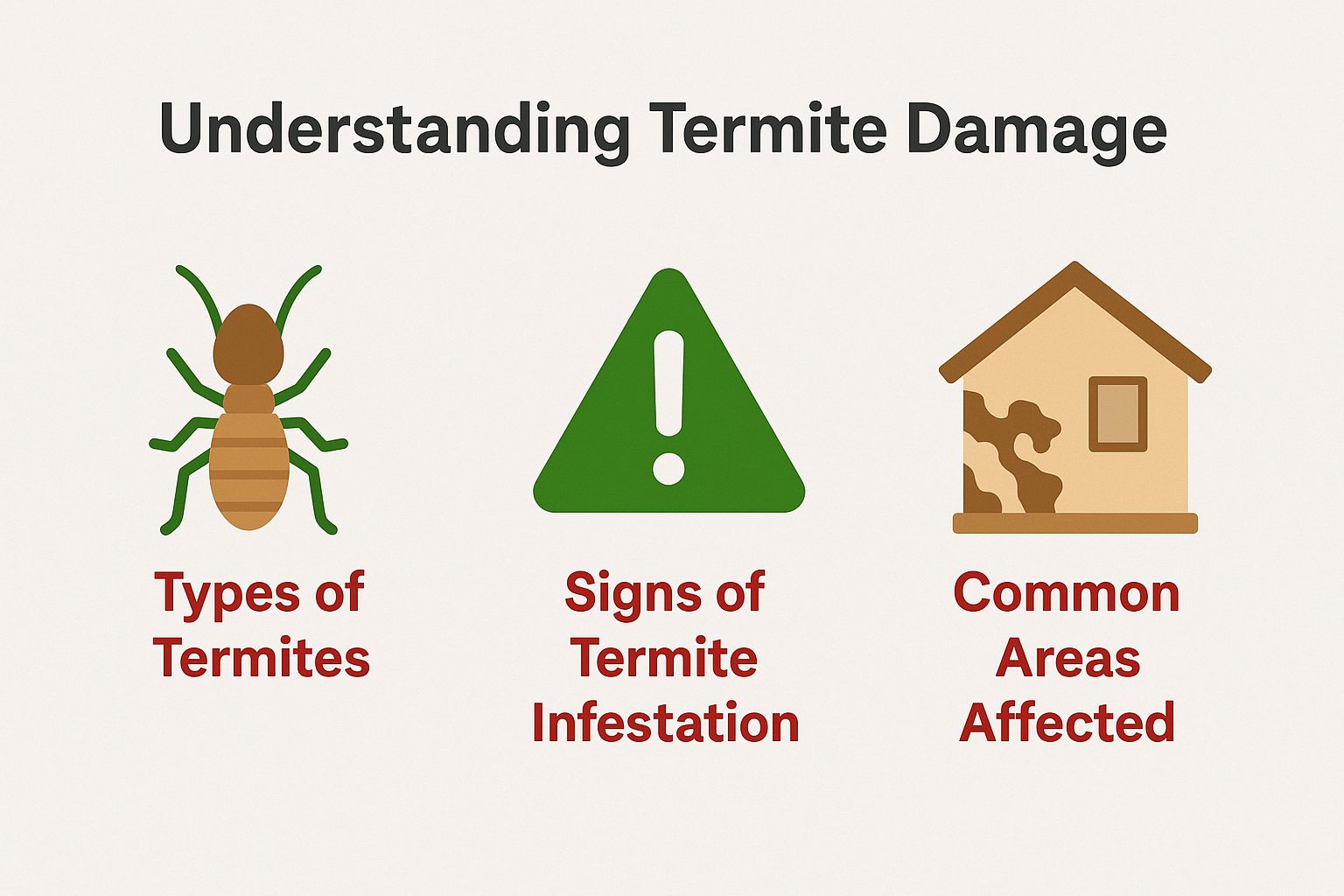
Types of Termites
There are three primary types of termites: subterranean, drywood, and dampwood, with subterranean termites causing 90% of the damage in the U.S.
Subterranean termites thrive in soil and require moisture, often infesting homes from below. These pests create complex tunnel systems that can compromise structural integrity.
Drywood termites, on the other hand, typically reside within the wood they consume, leading to hidden damage in furniture and walls. Meanwhile, dampwood termites prefer decayed wood and often inflict damage in areas with high humidity.
Each year, underground termites are responsible for about $5 billion in destruction. It’s important to prevent this by managing moisture and checking regularly for signs of termites.
Signs of Termite Infestation
Common signs of termite infestation include hollow-sounding wood, mud tubes on walls, and discarded wings, which can indicate significant damage that might go unnoticed.
To confirm a termite presence, homeowners should perform a thorough inspection using a flashlight and a screwdriver.
Shine the flashlight into hidden areas like basements or crawlspaces to reveal mud tubes and other signs. Use the screwdriver to tap wooden structures; if it sounds hollow or the tool penetrates easily, termites may have compromised the wood.
Check for swarming activity during warm months, as wings may accumulate near windows or porches, indicating a nearby colony. For a comprehensive understanding of warning signs, see also What Are the Signs of Termites in Your Home?.
Common Areas Affected
Termites often target wooden structures, but they can also invade areas including basements, attics, and around pipes, leading to critical structural issues.
Common wood types at risk include untreated pine, cedar, and oak, as well as materials like plywood and particleboard. They often infest structures such as wooden beams, door and window frames, and even furniture in humid conditions.
To mitigate these risks, consider using treated wood for outdoor projects and sealing penetrations around pipes with caulk to prevent entry.
Regular inspections and using gadgets like moisture meters can help detect termite signs early, making prevention more effective.
Impact of Termite Damage on Home Value
Termite damage can greatly reduce a home’s value, with homes showing signs of infestation often losing 20-30% of their market price. For those dealing with such issues, understanding the costs involved in remediation is crucial. Learn more about termite treatment costs and strategies to protect your investment.

Market Perception
Buyers’ perception is hugely impacted by termite damage; homes with a history of infestation often face prolonged listing times and lower offers.
Studies indicate that homes with a history of termite infestations can lose up to 20% of their market value. For instance, a home originally priced at $300,000 may only sell for $240,000 if a termite issue is disclosed.
Buyers may require thorough inspections and guarantees from pest control companies, complicating the sale. To mitigate this perception, sellers should provide potential buyers with clear documentation of past treatments and inspections, ideally alongside warranties from reputable pest control companies.
This openness can rebuild buyer trust and make the property more appealing.
Repair Costs and Their Implications
Fixing damage caused by termites can cost between $1,500 and more than $10,000, depending on how bad it is, which can lower what sellers earn and their possible profits.
Common repairs can include structural reinforcements, which may cost between $2,000 and $8,000 for significant infestations, and replacement of damaged wood, typically priced at $300 to $600 per room.
Preventive treatments can range from $200 to $2,000, depending on the method used, such as soil treatment or bait stations.
Sellers need to think about the cost of repairs and how the risk of damage might lower the home’s market value. Making quick and effective changes can increase the home’s worth and attractiveness.
Insurance Considerations
Most property insurance policies do not cover termite damage, leading to substantial out-of-pocket repair costs for homeowners.
Homeowners should thoroughly review their policies to understand the specific exclusions regarding pest damage. It’s advisable to look for endorsements or riders that might offer limited coverage for termite infestations.
Consider investing in a termite warranty from pest control companies, which often includes regular inspections and treatment for a set fee. For example, Terminix provides options starting at around $500 per year, potentially saving thousands in repair costs.
Acting early can reduce the risks and costs linked to termite damage.
Assessing the Extent of Damage
Checking the damage caused by termites is important for making the right repairs and setting a fair price when selling the property.

Professional Home Inspections and Reports
Hiring a certified pest control expert for a complete home inspection can cost between $75 to $200, offering reassurance for sellers and providing a detailed inspection report.
During the inspection, professionals focus on key areas such as the foundation, attic, and any visible wood damage to check for signs of infestation. They will also examine moisture levels, as this can indicate potential problems.
Expect a detailed report outlining any issues found and recommended next steps, including treatment options if pests are detected. Usually, the process takes about 1-2 hours. This thorough check of the property safeguards your investment.
DIY Assessment Techniques
Homeowners can identify potential termite damage by checking for soft wood, mud tubes, and inspecting crawl spaces, using tools like a flashlight and a screwdriver.
To perform a complete check, follow these steps:
- First, examine soft wood by tapping it gently with the screwdriver; a hollow sound indicates possible infestation.
- Next, look for mud tubes along foundations, which can be moist and pencil-sized.
- Shine your flashlight into crawl spaces, focusing on any signs of discarded wings or fecal pellets.
- Don’t forget to check wooden structures, furniture, and frames in basements or attics.
Inspecting twice a year can find infestations early and prevent costly repairs.
Disclosing Termite Damage to Potential Buyers
Sellers must inform buyers about any known termite damage, as this can greatly affect how much buyers trust them and the discussions about the sale.
Legal Obligations
Depending on your state, failing to disclose termite damage can lead to legal repercussions, including lawsuits for misrepresentation.
Specific legal obligations vary by state, but generally, sellers must inform potential buyers of known termite infestations or damage.
For example, in California, the seller must complete a Transfer Disclosure Statement outlining any pest issues. In contrast, Florida mandates that such disclosures occur on the Seller’s Disclosure Statement.
To follow the rules, homeowners should check local real estate laws or hire a real estate attorney. Regular property inspections also help identify termite damage early, mitigating legal risks and enhancing transparency during the selling process.
Best Practices for Disclosure
Best practices for disclosure include providing detailed records of termite inspections and repairs to reassure potential buyers and reduce buyer concerns.
It’s important to keep detailed records of all checks and repairs.
For instance, document the dates of inspections and names of pest control companies, along with detailed descriptions of any treatment performed. Offering access to these records can build trust.
Include before-and-after photos, showcasing the effectiveness of the repairs. When sellers are honest about previous termite issues and address any concerns early, they can create trust with buyers, simplifying the buying process.
Sellers Guide: Mitigation Strategies for Selling a House
Sellers can apply practical measures for damage assessment and pest infestation control, improving the property’s attractiveness and home equity.
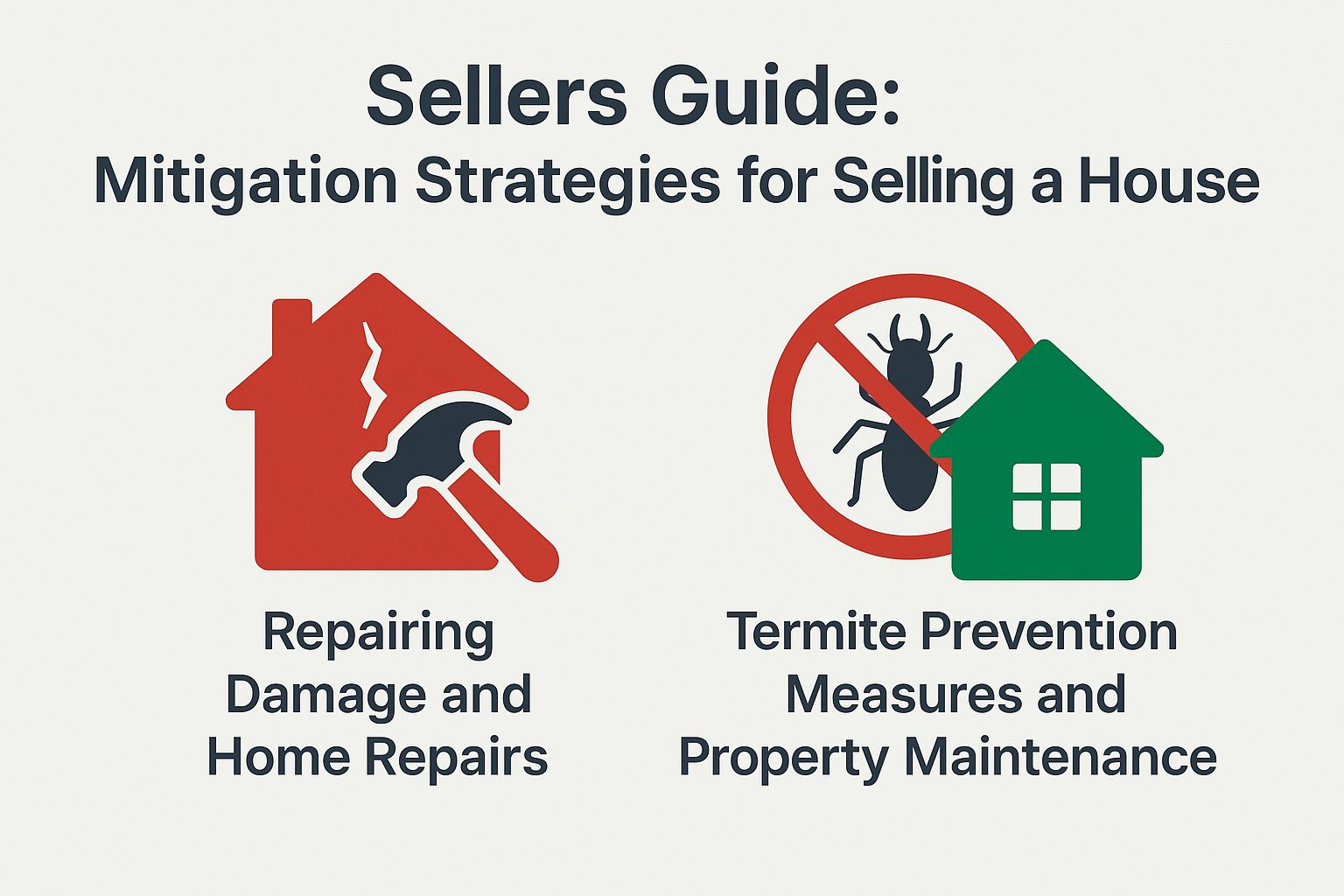
Repairing Damage and Home Repairs
Repairing involves replacing broken wood, utilizing repair services and professional treatments. Costs can be between $1,000 and $5,000, depending on the damage history.
For minor termite damage, homeowners can often repair the damaged areas by replacing affected wood, implementing termite control, and sealing entry points.
For bigger problems, it’s important to hire a pest control expert. They may employ methods such as foam treatments or baiting systems, which can significantly increase costs but are essential for long-term value solutions and insurance claims.
Consider obtaining multiple repair estimates to understand the range of services and pricing. Regular inspections, about $100 annually, also help catch localized pest issues early, minimizing repair costs down the line.
Termite Prevention Measures and Property Maintenance
Carrying out regular checks and ensuring good airflow can greatly lower the chance of termite problems and environmental concerns later on.
Homeowners should adopt a proactive approach by scheduling annual professional inspections to catch signs of infestations early, enhancing home safety.
Treat any wood damage with borate-based solutions or insecticides, which penetrate the wood and act as a long-term preventive barrier.
Make sure your home has enough airflow in crawl spaces to prevent moisture, which draws termites. You might install vents for better construction quality or update drainage systems.
Regularly check for leaks and seal cracks in foundations, as these can also serve as entry points, impacting equity value. By being vigilant and addressing these issues, you can safeguard your home effectively.
Market Strategies for Selling a House with Termite Damage and Property Investment
Sellers should set competitive prices and promote effectively to reduce the impact of termite damage on selling homes.

Pricing Adjustments and Selling Strategy
Adjusting the listing price by 10-20% below market value can attract buyers despite termite damage, ensuring quicker sales and addressing buyer negotiations.
To effectively calculate your adjusted price, first, assess the extent of the damage through a property assessment.
For properties with minimal issues, consider a 10% discount; for more significant repairs, a 20% reduction may be necessary.
Use online appraisal tools such as Zillow or Redfin to find out current market values. Reach out to pest control professionals for quotes to estimate repair costs. Use property valuation techniques to clearly present your pricing strategy.
By transparently communicating these factors to potential buyers, you can build trust and facilitate a smoother sales process.
Marketing the Property Effectively and Seller Responsibilities
Effective strategies for competing in the market include highlighting recent renovations and inspection reports to assure potential buyers about the property’s condition and increased value.
Along with showcasing renovations, consider presenting detailed inspection reports that highlight pest control measures, specifically addressing any termite treatment history.
For instance, if your property was treated with a leading product like Termidor, include documentation of the termite treatment, such as dates and warranty information. Transparency builds trust for buyer risk assessment.
You might also post before-and-after photos online, as visual evidence can significantly impact buyer confidence. Hosting an open house can allow potential buyers to ask questions directly, reinforcing the property’s value and condition in real-time.
Final Thoughts for Sellers: Seller’s Market Considerations
Sellers should focus on dealing with termites early, considering insurance coverage and being open about any issues to help buyers feel more confident and receive better offers through informed buyer education.
Clear communication is essential in a property disclosure statement. Consider providing potential buyers with documentation showing recent termite inspections and any treatment performed.
Sharing information on prevention methods, such as maintaining proper drainage and ensuring no wood-to-soil contact, can further reassure buyers. Engage with professionals to carry out routine inspections, as this prevents potential infestations from worsening.
When sellers show careful attention to pest control and repair services, they can protect their property’s value and build buyer trust, which results in better negotiations and financing options.
Compare Termite Control QuotesAuthor Bio:
Written by Kevin McAlister, a Cornell University graduate with a degree in agricultural biology, entomology, and bioagricultural sciences. I’m the owner of a successful pest control company in Delaware and a writer and editor for Pest Extinct. For the past nine years, I’ve specialized in sustainable, science-based pest control solutions for residential and commercial clients across the Northeast.
Leave a Reply